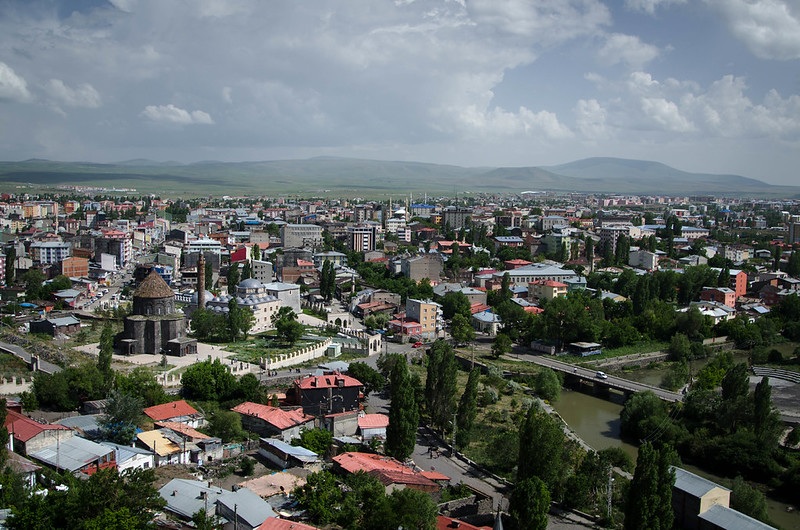
 Plate 1: Kars (Source, Source)
A Brief History of Kars in North-East Türkiye1
Sam Topalidis (2026)
(Pontic Historian and Ethnologist)
Introduction
Kars is a town situated on a plateau 1,750 m above sea level on the Kars River, near the border with Armenia. The Kars region covers the south-west hillsides of the Caucasian mountains in the inner north-east of Türkiye (Figs 1–3; Plate 1). Winters are long and temperatures can plummet to −30°C with heavy snowfall. The town is divided into an older upper section and a newer part to the south (Şentürk (2023); www.britannica.com/place/Kars).
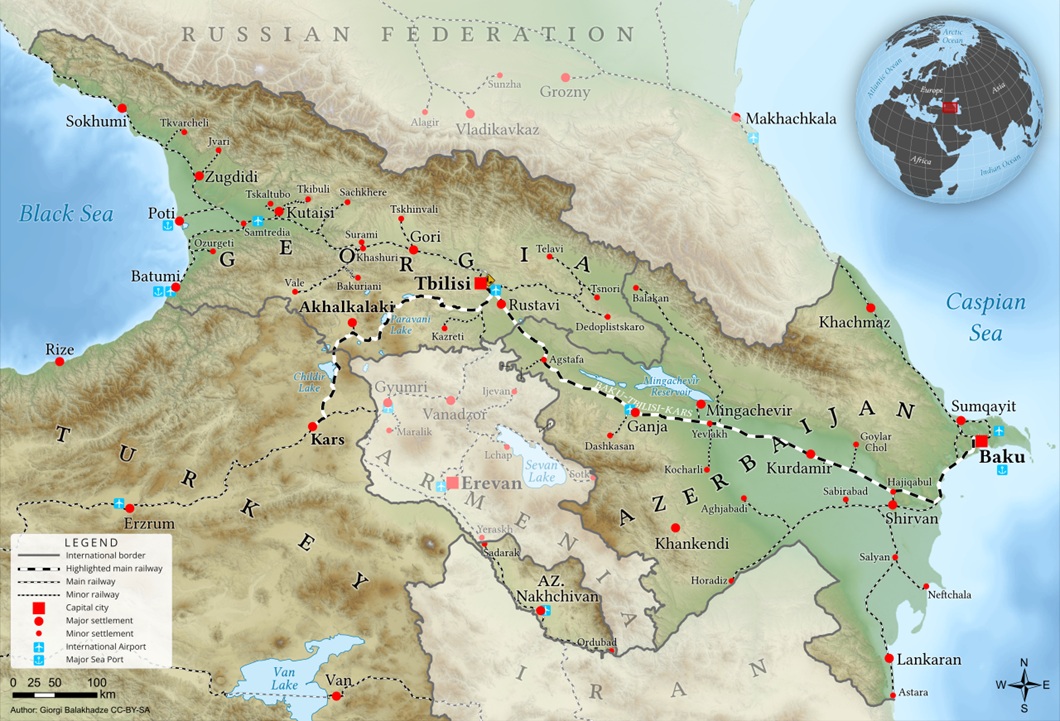 Fig. 1: Map of north-east Anatolia, Georgia, Armenia and Azerbaijan (Source)
History
Kars is the intersection point of different cultures. The oldest settlement (so far discovered) dates back to the Early and Middle Bronze Age. During the 9th and 10th centuries, it was the seat of an independent Armenian principality. It became a part of the Byzantine (Eastern Roman) empire before it was conquered by the Seljuk Turks in 1064. It was once again captured by the Byzantines. The town was occupied by Georgians in 1231, by Mongols in 1239 and then by Timur (Tamerlane2) in 1387. After Timur’s death in 1405, his territories were run by his son, Shāh Rokh. In 1447, there was internal rivalry after Shāh Rokh’s death (Note 1). In 1534, Kars was conquered by Ottoman sultan Suleyman and it remained under Ottoman Turk control for nearly 300 years. It fell to the Russians in 1828 (Note 2) and 1855 (but was twice returned to the Ottoman Turks) but was formally annexed by Russia in 1877–1878. This led to the departure of the Moslem populations and prompted Christians to move eastwards to the Kars region (Ertaş (2016:613); www.britannica.com/place/Kars). The Russians brought modernisation and less taxation and by the end of the 19th century, Kars was connected by railway to Tbilisi and Baku (Fig. 1) (Badem 2025). Thousands of Russians were settled in and around Kars and incentives were given to Christians including Pontic Greeks to move to the greater Kars area (Koromila 2002:410–411).
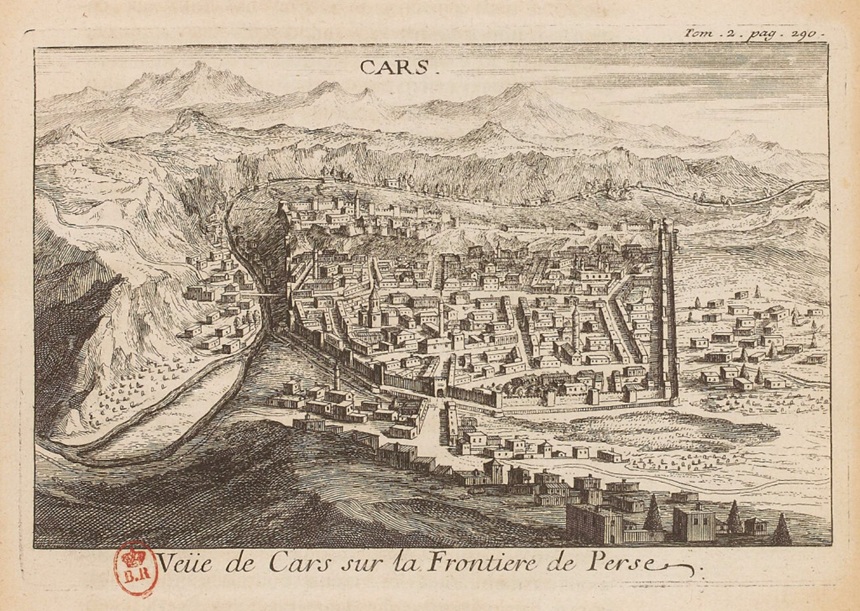 Fig. 2: Kars (1656–1708, Tournefort (1717): Source
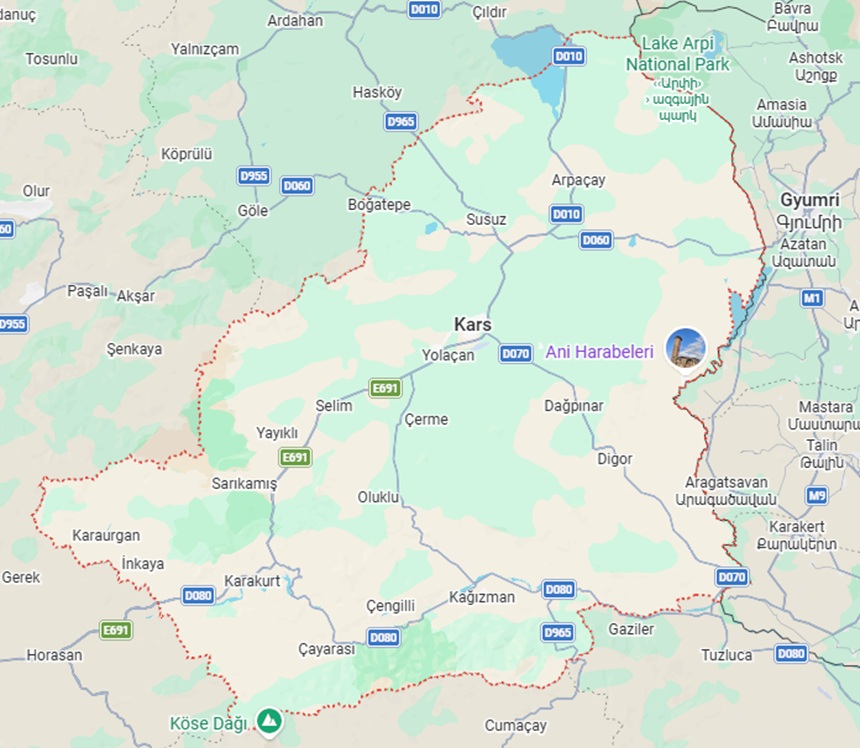 Fig. 3 Kars province, north-east Türkiye (Kars to Sarikamiş = 56 km; Google maps)
Descriptions of Kars
Kars Citadel
In the 9th century, with the threat of Muslim invasion, the Armenians built the first fortifications at Kars, on the rocky heights. Turks retook the town in 1585 and destroyed its fortifications. In the 18th century the Ottoman Turks rebuilt the stronghold to block Persian encroachment in the region. An abundance of existing basalt enabled the construction of a massive structure. Perched above the adjacent valley, Kars citadel was built on a concentric plan with two ring-walls, the lower one backed by an inner wall 11 m high. The walls stretched for nearly 3 km around the rocky summit with many towers (Plate 2) (https://historynet.com/kars-fortress/).
 Plate 2: Kars citadel (Source)
Churches
The former Armenian Church of the Holy Apostles which was built in the 10th century is located below the citadel (Buča et al. 2020) (Plate 3). The church was converted to a mosque in 1579 and then converted into a Russian Orthodox church in the 1880s. The church was yet again converted into a mosque in 1993 (www.facebook.com/groups/Archaeology.Prehistoric/posts/1340448839437655/).
 Plate 3: Former Holy Apostles Armenian Church (Havariler Museum) (Source)
The Russian Orthodox Alexander Nevsky Church originally built between 1885 and 1890, stands out with its beautiful stonework (Plate 4). In 1921, the building was converted into the Fethiye Mosque. Today, the mosque serves as a place of worship and an important cultural and historical structure (https://rusturportal.com/kars-fethiye-camii/ www.kulturportali.gov.tr/turkiye/kars/gezilecekyer/fethye-cam369914).
 Plate 4: Kars Fethiye Camii (Source)
Visitors to Kars
Brant visited Kars in 1835 and found it walled with a citadel. The town was little better than a heap of ruins, not containing above 1,500 or 2,000 families (Brant 1836).
A little later, in June 1836, Hamilton stated Kars was picturesquely situated in a rocky amphitheatre, its appearance dismal from its lack of trees and the houses built of black basalt. The Armenian suburb was built on the eastern side of the river. In the centre was a hill with the ruined citadel. Entering the walled part of the town, most of the houses were in ruins, the effect of Russian hostilities (Hamilton 1842:193).
In 1893, the population of Kars was estimated by Lynch to be not more than around 4,000 (excluding the garrison), made up of 2,500 (around 62%) Armenians, 850 Turks, over 300 Greeks and 250 Russians (Lynch 1901:405).
In 1907, there were 76 Greek villages with 37,456 Anatolian (including Pontic) Greeks in the Kars province (Fig. 3). There were 14 Government schools and 57 Greek schools (Lazaridis 1988:472–474). In the Kars ‘district’, the Greek population which was 15,105 in 1882, increased in 1914 to 53,700 (Sağir 2021:327–328).
From World War I
In 1915, when the Ottoman army advanced into the Kars region, Greek refugees fled fearing massacres (https://kars1918.wordpress.com/2010/02/25/kars-kavkaz/).
In summer 1916, Russian army officer, Sergei Mintslov, briefly visited Russian occupied Kars and was less than complimentary. He observed little stone houses and half-fallen down long wall-fences which stretched out in places along the streets. Around the small hill, over which the town stretched was a muddy small river which made him think of the mythical underworld river Styx of the ancient Greeks. ‘What a horror it would be to be condemned to years in this wretched hole’ (Mintslov 1923: 21 May (old calendar)).
By the end of February 1918, the Russian army completed its withdrawal from north-eastern Anatolia. An estimated 80,000 Anatolian (including Pontic) Greeks accompanied the Russians as refugees (Xanthopoulou-Kyriakou 1991).
In April 1918, the Ottoman army captured Kars which forced 50,000 Anatolian (including Pontic) Greeks from the region to flee, of which around 10,000 were believed to have perished (Petsalis-Diomidis 1972:226, 246).
By February 1919, the Allies ordered the Ottoman Turks to withdraw from Kars behind the 1914 borders. The Allies also recognized Armenia as an independent republic. The transfer of Kars was not peaceful. Armenian troops roamed the countryside, while Kars’ Ottoman governor refused to accept the treaty terms. The Ottomans were ousted in April 1919 by a joint British-Armenian force and Kars was occupied by Armenian troops. (In 1919, there were 4,500 people in the town of Kars and immediate surroundings (https://kars1918.wordpress.com/2010/02/25/kars-kavkaz/ Selcer (2021)). In October 1920, Turkish General Karabekir captured the Kars citadel, capturing more than 2,000 Armenian soldiers (McMeekin 2016:441). Much of the town's Armenian population had fled before the advancing Turks (http://virtualani.org/kars/index.htm).
From May 1920 until February 1921, an estimated 53,000 Pontic Greeks exited from Batumi (now in modern Georgia) to Greece. Three quarters of them were refugees from Kars and Ardahan (90 km north-east of Kars, Fig. 3) (Pratsinakis (2013); Vergeti (1991)).
In 1921, Soviet forces occupied Armenia and imposed a treaty on Turkey that established the border between Turkey and the Soviet Union’s three Transcaucasian republics. Signed in October, the treaty left the Kars fortress in Turkish hands (Selcer 2021).
Pontic Greek Music
The Kars region is remarkable regarding Pontic Greek musical culture, with its own characteristic dance and music repertory. The Kars region provides some unusual music and dance forms, which had emerged where many ethnic groups were living, including Turks, Kurds Armenians etc. The most outstanding musical elements that distinguish Kars are the 6/8 or 3/4 rhythmic forms, which only exist in the music tradition of the Pontic people from Kars. Examples of this 6/8 rhythm can be found in the Pontic dance tunes Letsina, Tas, Tria ti Kotsari and Touri (Şentürk 2023:68–69).
The main traditional musical instruments of the Kars region were the three-string kemençe, kemane (a large kemençe with more strings, but here without sympathetic strings), tulum (bagpipe with a double chanter without a drone pipe), zourna (a double reed wind instrument), clarinet and daouli (double-headed drum). The clarinet and zourna were prevalent in the area. The kemençe playing style was affected by the local musical culture of Kars after the arrival of people from Pontos. The local traditional repertory and the performance of the predominant traditional instruments like clarinet and zourna have played an essential role in the development of the kemençe performance of the Kars region (Şentürk 2023:69).
However, it is unknown if the playing style of the kemençe in Kars, which was brought to Greece was traditional to Kars or has been developed since its arrival in Greece. The kemençe playing style of the Kars region reveals common characteristics like double-stopping and the intense use of trills. It is distinguished by melodic fragmentations, melodic progression and rhythmic structure. Master Pontic Greek kemenche player Gogos Petridis (1917–1984) and respected Pontic Greek singer, Chrysanthos Theodoridis (1934–2005, whose parents were from the Kars region) played a vital role in their performances of the Kars repertory in Greece (Tsanasidis, personal interview 2017, in Şentürk (2023:69–70)).
Kars Today
There are 91,450 people in the town of Kars (2022 estimate; https://citypopulation.de/en/turkey/kars/TRA2200__merkez/). The Kars province is impoverished: the economy is based on agriculture, livestock and forestry, while industry, tourism and commerce are still developing (Buča et al. 2020). Local produce includes butter, honey, cheese and cooked goose (https://theessenceofturkey.wordpress.com/2013/12/30/kars-dancing-and-snow/).
The Türkiye and Armenian border has been closed since 1993. At the end of 2025, Türkiye and Armenia held talks on the opening of the Kars-Gyumri cross-border railway link, something which would benefit both countries.
Life in Kars is not easy due to its very cold winters. Kars is known for its churches and castles which provide very good examples of Russian and Ottoman Turk architecture (https://theessenceofturkey.wordpress.com/2013/12/30/kars-dancing-and-snow/).
Notes
Note 1
The years 1449–1469 were marked by a struggle between the Timurid Abū Saʿīd and the Uzbek confederations of the Kara Koyunlu (Black Sheep) and Ak Koyunlu (White Sheep). By 1469, the Ak Koyunlu ruled in the west. The last great Timurid was Ḥusayn Bāyqarā (1478–1506) (www.britannica.com/biography/Timur).
Note 2
After the 1828–1829 Russo-Turkish War, (an estimated) 42,000 Pontic Greeks from Gümüşhane and Anatolian Greeks from Erzurum followed the Russian troops and settled in the Russian empire in order to escape Ottoman repression (Xanthopoulou-Kyriakou (1991); Pratsinakis (2021:510)).
Acknowledgements
I wish to thank Michael Bennett, Russell McCaskie and Dr Myrofora Efstathiadou for their comments to an earlier draft.
1. There is a lack of information in English on Kars.
2. Tamerlane, of Turko-Mongol descent was the last major nomadic conquerors of the Eurasian Steppe.
References
Badem C (2025) Kars province under Russian rule: imperial rivalry and nation-building in the periphery, 1878–1918, Routledge, London, England.
Brant J (1836) ‘Journey through a part of Armenia and Asia Minor in the year 1835’, Journal of the Royal Geographical Society of London, 6:187–223.
Buča VJ, Gwirtzman K and Maranci C (2020) ‘Armenian ecclesiastical sites in the Kars province (Turkey): current state, preservation and revalorization’, Heritage & Society, 13(3):165–197.
Ertaş Ş (2016) ‘The physical environment changing of Kars city after the 93 war’,:612–624, in Developments in Science and Engineering, Efe R, Matchavariani L, Yaldır A and Levai L (eds) St. Kliment Ohridski University Press, Sofia, Bulgaria.
Hamilton WJ (1842) Researches in Asia Minor, Pontus and Armenia: with some account of their antiquities and geology, 1, (originally published by John Murray, London), reprinted 2009.
Karpozilos A (1999) ‘The Greeks in Russia’,:137–157, in Clogg R (ed) (1999) The Greek diaspora in the twentieth century, St Martin’s Press, New York, USA.
Koromila M (ed) (2002) The Greeks and the Black Sea: from the Bronze Age to the early 20th century, new and enlarged edition, (translated from Greek into English by Doumas A and Fowden EK), The Panorama Cultural Society, Athens, Greece.
Lazaridis D (1988) Στατιστικοι πινακες της εκπαιδεύσεως των Eλληνων στον Ποντο 1821–1922 (in Greek), [Statistical list of Greek schools in the Pontos 1821–1922], Archeion Pontou, 16, The Committee for Pontic Studies, Athens, Greece.
Lynch HFB (1901) Armenia. Travels and Studies, I, London, (reprinted Khayats Oriental Reprints, Beirut, 1965).
McMeekin S (2016) The Ottoman endgame: war, revolution, and the making of the modern Middle East, 1908–1923, Penguin Books, New York, USA.
Mintslov SR (1923) Trapezondskaia epopeia (in Russian), [Russian accounts of Trabzon], (unpublished translation into English by McCaskie R), Sibirskoe Knigoizdatel’stvo, Berlin, Germany.
Petsalis-Diomidis N (1972) ‘Hellenism in southern Russia and the Ukrainian campaign: their effect on the Pontus question (1919), Balkan Studies, 13(2):221–263.
Pratsinakis E (2013) Contesting national belonging: an established-outsider figuration on the margins of Thessaloniki, Greece, PhD thesis, University of Amsterdam, The Netherlands.
Pratsinakis M [E] (2021) ‘Ethnic return migration, exclusion and the role of ethnic options: ‘Soviet Greek’ migrants in their ethnic homeland and the Pontic identity’, Nations and Nationalism, 27(2):497–512.
Sağir G (2021) ‘Kars Mağaracik, Greek village and its chapel’, [in Turkish] Turkish Studies, 16(7):327–338.
Selcer RF (2021) ‘Kars fortress stands as a monument to a turbulent past’, Military History, at: https://historynet.com/kars-fortress/
Şentürk O (2023) The Black Sea fiddle: a case study about Trabzon and Thessaloniki, PhD thesis, Istanbul Technical University, Istanbul, Türkiye.
Tournefort JP de (1741) A voyage into the Levant, III, letter v, (translated from French to English by Ozell J), original work published 1717, London, England.
Vergeti M (1991) ‘Pontic Greeks from Asia Minor and the Soviet Union: problems of integration in modern Greece’, Journal of Refugee Studies, 4(4):382–394.
Xanthopoulou-Kyriakou A (1991) ‘The diaspora of the Greeks of the Pontos: historical background’, Journal of Refugee Studies, 4(4):357–363.