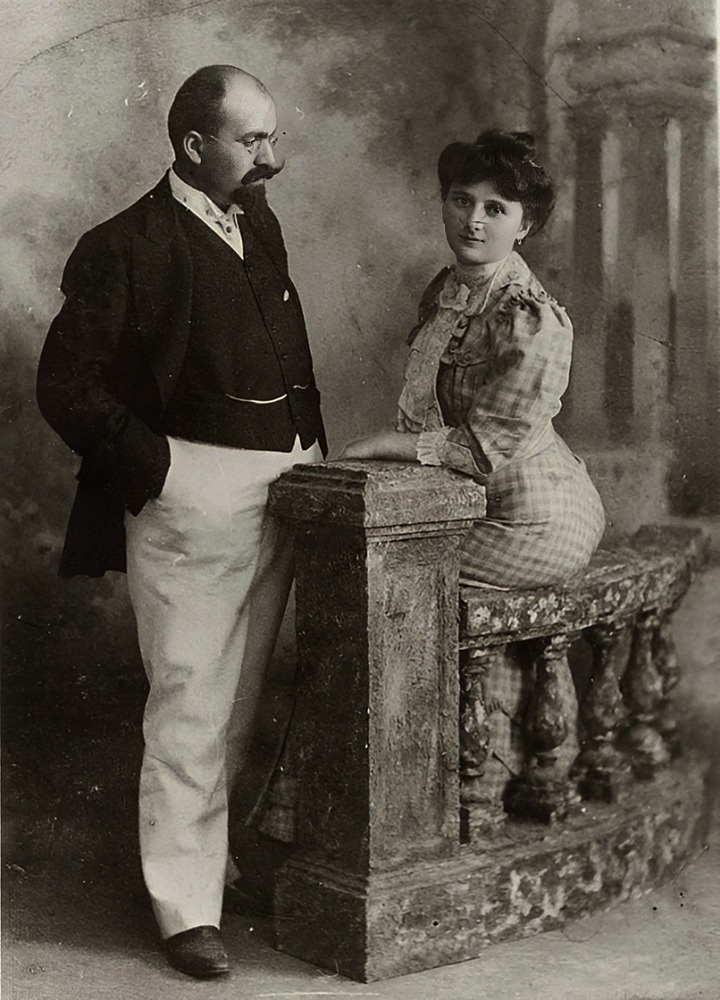
Plate 1: Konstantinos and Anna Kapagiannidis (Source: Pontosnews).
Sam Topalidis (2026)
(Pontic Historian and Ethnologist)
Konstantinos Kapagiannidis (1868–1915), a Pontic Greek businessman, was born and died in Trabzon in north-east Anatolia (Fig. 1). He graduated from the Trabzon Greek Frontistirion school and worked in merchant/trade and banking businesses owned by his father Grigorios Kapagiannidis. The family traded in sugar, cocoa and other food into the depths of the East through Trabzon. The Grigorios Kapagiannidis Bank was established to help customers, so that they could pay their instalments. After he graduated, aged 17 years, Konstantinos worked in the Erzurum branch (south-east of Trabzon) of his father’s bank. He soon began managing his father’s businesses. Konstantinos and his younger brother Alkivadis co-managed the bank.
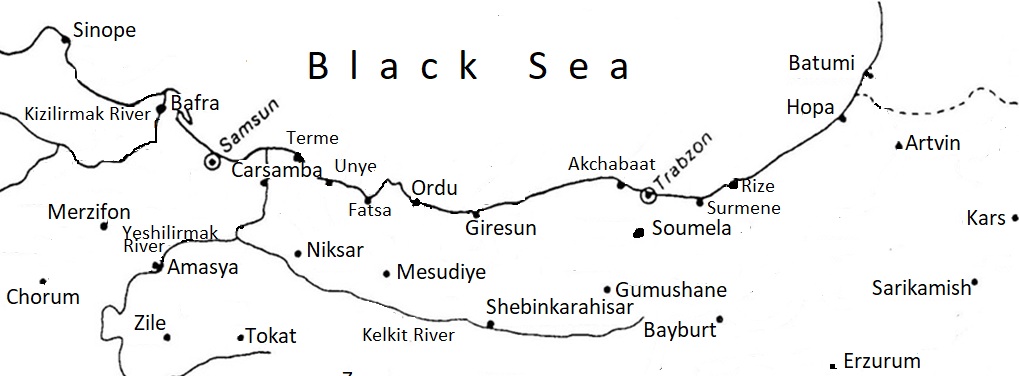
Fig. 1: North-east Türkiye (290 km Samsun to Trabzon)
Of the five banks in Trabzon, three (Theophylaktos, Kapagiannidis and Fostiropoulos) were owned by local Pontic Greeks. The fourth was a branch of the Ottoman Bank and the fifth was a branch of the Bank of Athens. These Greek banks were pivotal in the prosperity of the greater Trabzon area.
Konstantinos possessed a Russian passport (Note 1), which gave him certain financial privileges. The family business reached south to Erzurum and Bayburt. In 1904, he married Anna Triandaphyllidou (14 years his junior, Plate 1). In 1905, the stylish family home (Plate 2) was built by two Greek engineers Alexandros Kakoulidis and [allegedly] Dimitrios Filizis. It was located on the Soğuksu hillside which overlooked Trabzon where many rich people had their summer pavilions. The multi-storey building had central heating.
Soon after its construction, the couple moved to Switzerland because Konstantinos suffered from tuberculosis and his doctors recommended he live in an environment with fresh air. From there he ran his businesses remotely. From 1907 to 1912, five of their children were born in Switzerland. Their sixth child, Kostas, was born in 1915 in Trabzon, a few months before Konstantinos died.
Konstantinos was [allegedly] the Russian consul at Trabzon and because he held a Russian passport, in 1914 at the beginning of World War I the Turks confiscated his products at the port of Trabzon. Subsequently, the Russian military occupied the Trabzon region from 1916 to early 1918. After Konstantinos’ death in 1915, Alkivadis had taken over the family businesses, but in 1923 they went bankrupt.
With the compulsory population exchange between Greece and Turkey, Anna Kapagiannidis and her children moved to Greece in 1923. Anna started selling her jewellery in order to survive which she did until 1930. Even after 1930, the family lived comfortably.
The Turkish state took possession of the family mansion. Mustafa Kemal (called Atatürk from 1934) stayed there when he visited Trabzon in 1930 and 1937. This building was given to Atatürk by the Trabzon governor. After Atatürk’s death in 1938, the building was inherited by Atatürk’s sister. In 1942, the building was purchased by the Trabzon Municipality and opened as a museum.
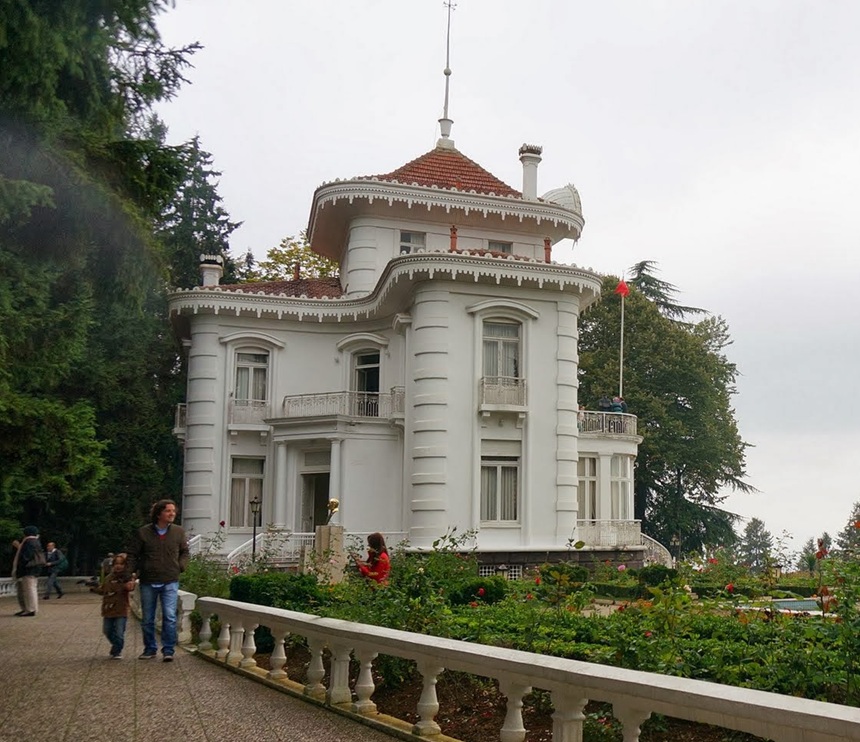
Plate 2: Kapagiannidis mansion Trabzon (Atatürk Pavilion 2017, Wikimedia Commons)
After moving to Greece in 1923, in 1983 and 1985, Konstantinos’ son Kostas returned to Trabzon and visited his family’s home. In turn, in 2001, Kostas’ son, Themis and his wife, Riki Triantayllidou, visited Trabzon.
The Kapagiannidis family was one of the most famous and wealthy Greek business families in Pontos. Konstantinos Kapagianidis left a legacy in Trabzon with his stylish mansion which overlooks the town and is now a museum called the Atatürk Pavillion (Plate 2).
Note 1
As the activities of the Christian merchants of the Russian Black Sea ports and Tabriz increased, the position of the Greeks and Armenians in Trabzon, acting as intermediaries, became important. Meanwhile, these merchants attracted the attention of both the Russian and the British consuls at Trabzon, who saw them as sole agents of European trade. In extending protection to Christian Ottomans, European diplomats and consuls in major Ottoman centres abused privileges granted to them. They extended the rights given to their own nationals to some non-Muslim Ottoman subjects for political and economic aims. This included issuing passports. Essentially, these diplomats created a privileged class—and helped them obtain preferential treatment in business.
Acknowledgements
I warmly thank Michael Bennett and Russell McCaskie for their comments to an earlier draft.
References
- https://pontosworld.com/index.php/history/biographies/128-konstantinos-kapagiannidis-1868-1915
- Koromila M (ed) (2002) The Greeks and the Black Sea: from the Bronze age to the early 20th century, 2nd English edn (translated by Doumas A and Fowden EK), The Panorama Cultural Society, Athens, Greece.
- Köse I (2011) Trabzon: four thousand years’ heritage & the divine traces, 2nd edn, (in Turkish and English), Akademi Yayinlari, Trabzon, Türkiye.
- Turgay AU (1982) ‘Trade and merchants in nineteenth-century Trabzon: elements of ethnic conflict’, 1:287–318, in Braude B and Lewis B (eds) (1982) Christians and Jews in the Ottoman empire: the functioning of a plural society, Holmes & Meier Publishers Inc., New York.
- Trabzon Provincial Directorate of Culture and Tourism (2016) Home of Trabzon, Trabzon Provincial Directorate of Culture and Tourism, Trabzon, Türkiye.
- www.pontosnews.gr/838738/synentefxeis/themis-kapagiannidis-i-vila-kapagiannidi-itan-to-spiti-tis-oikogeneias/